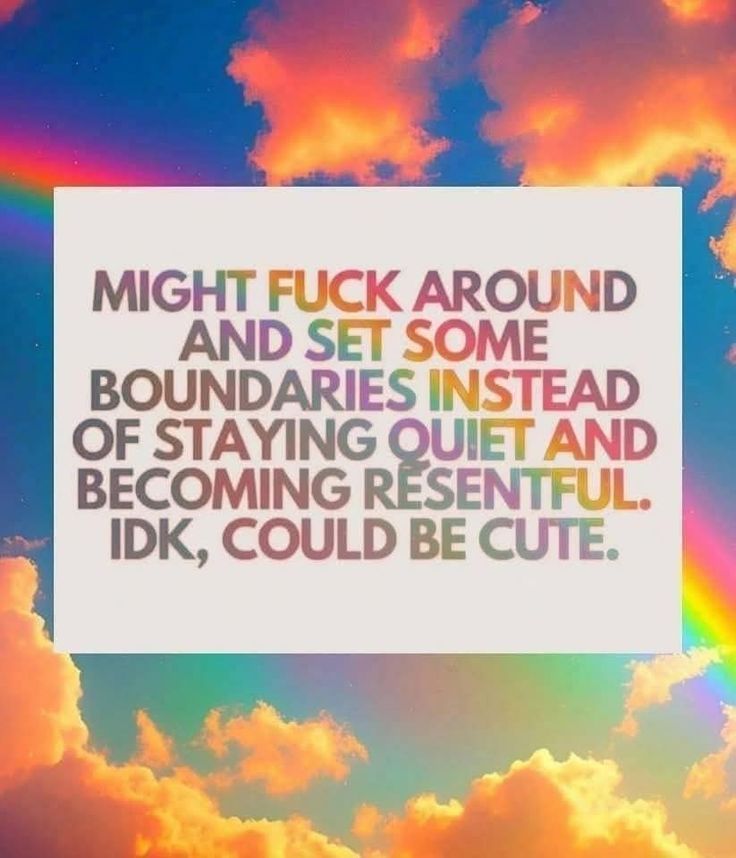

There is a particular kind of exhaustion that comes from having to say the same thing over and over again.
You finally find the words to explain what you need. You communicate clearly. You try to be reasonable. You tell yourself that if they understand where you’re coming from, things will be different.
And then they do it again.
Maybe they dismiss what you said, push against the limit, or act as though your boundary was merely a suggestion. And suddenly, you’re left wondering whether you were too sensitive, too demanding, or somehow communicated it wrong.
But sometimes the problem isn’t that your boundary wasn’t clear. It’s that the other person doesn’t want to respect it.
A Boundary Is Not a Request for Permission
One of the hardest things about boundaries is that we often expect them to be mutually agreed upon.
But a boundary is not about controlling another person’s behavior. It is about defining what you are willing to participate in and what you will do when something no longer feels healthy or acceptable.
This distinction matters.
You can tell someone, “I’m not willing to have conversations when I’m being yelled at.” You cannot make them stop yelling. What you can decide is what you will do when they do.
As Nedra Glover Tawwab discusses in Set Boundaries, Find Peace, boundaries involve both communication and action. Naming what you need matters, but so does following through when that need is not respected. Set Boundaries, Find Peace
That can feel uncomfortable, especially if you learned early in life that keeping relationships stable meant being flexible, accommodating, or understanding other people at your own expense.
You may be used to asking yourself, How can I make this easier for them?
Boundaries ask a different question: What do I need to feel safe, respected, and well in this relationship?
When the Boundary Keeps Getting Crossed
There is an important difference between someone struggling with a new boundary and someone repeatedly refusing to respect it.
Healthy relationships involve adjustment. People misunderstand each other. They make mistakes. They can feel disappointed by a boundary and still choose to respect it.
But when you have communicated a boundary clearly and the same behavior continues, something else may be happening.
The repeated violation can begin to change how you experience the relationship itself. You may become guarded. You may start anticipating the next conflict or carefully managing your words to avoid another reaction. Over time, you can find yourself spending more energy preparing for someone’s response than actually being yourself.
That is often where resentment begins.
Not necessarily because the other person crossed one boundary once, but because you began to realize that your needs were repeatedly being treated as negotiable.
Sometimes the Boundary Reveals the Relationship
This is one of the hardest truths about boundaries: sometimes the boundary didn't create the conflict. It exposed the imbalance that was already there.
A relationship can feel relatively peaceful when one person is constantly accommodating. But when that person begins saying no, asking for something different, or stepping out of an old role, the relationship has to adjust.
And that adjustment tells you something.
How does this person respond when you disappoint them? Can they tolerate your autonomy? Can they hear that something hurts you without making your feelings the problem? Are they willing to repair when they get it wrong?
These moments can reveal the actual capacity of a relationship—not just how it functions when everything is comfortable.
Sometimes that realization is painful.
You may discover that the relationship can grow with you. You may discover that it needs more distance. Or you may realize that the relationship depended on you having very few needs in the first place.
What Do You Do When They Cross the Boundary?
The answer is not always to explain it better.
If you have communicated clearly, repeating yourself may not create the change you are hoping for. Sometimes the next step is less about finding the perfect words and more about deciding what you are willing to do.
This is where consequences come in—not as punishment, but as protection.
If someone continues to speak to you disrespectfully, you may end the conversation. If someone repeatedly disregards a limit, you may reduce your availability or create more distance. If a relationship consistently leaves you feeling unsafe, diminished, or unseen, you may need to reconsider how much access that person has to you.
A consequence is not “I’m going to make you pay for crossing my boundary.” It is “I’m going to take care of myself when this continues.”
Sometimes taking care of yourself changes the relationship.
That can be heartbreaking. We often imagine that setting a healthy boundary will make the relationship healthier. Sometimes it does. Sometimes it creates the space for a more honest and respectful relationship to emerge.
And sometimes it shows you that the relationship only worked when you were the one doing all the adjusting.
Your Boundary Doesn't Need to Be Understood to Be Valid
One of the hardest parts of setting boundaries is accepting that someone may not agree with yours.
They may think you're being selfish. They may tell you that you've changed. They may become angry, disappointed, or defensive.
Their reaction does not automatically mean your boundary is wrong. You are allowed to make decisions about what you will participate in, even when someone else wishes you wouldn't.
The goal of a boundary is not to make everyone happy, it is to create relationships where you don't have to abandon yourself in order to keep the peace.
Sometimes, the most painful part of setting a boundary is not losing the relationship, it is realizing how much of yourself you had to lose to maintain it.
The boundary didn't ruin the relationship. It showed you what the relationship was or was not capable of holding.
You don't have to figure out your boundaries alone.
Sometimes setting a boundary brings up more than just the question of what to say. It can bring up guilt, fear, grief, anger, and questions about what a relationship can actually hold.
If you're trying to understand your relationships, break old patterns, or feel more grounded in your own needs, therapy can be a place to start.