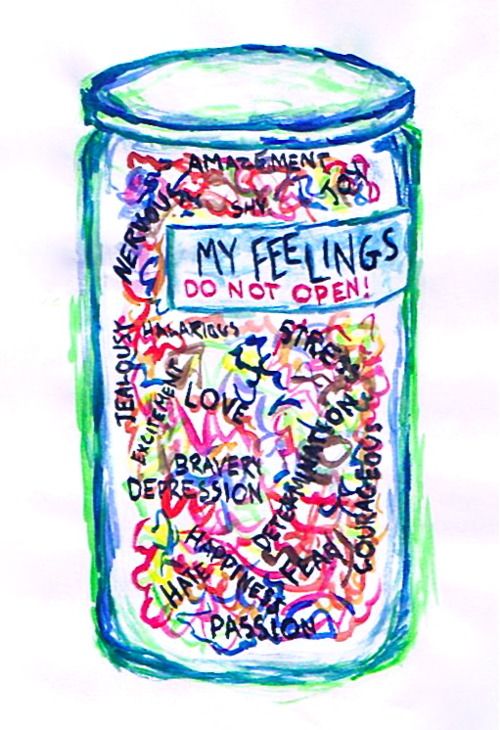

One of the most common moments I witness in therapy is surprisingly quiet. I'll ask a client a question that seems almost too simple. "What are you feeling right now?"
More often than not, they pause. Sometimes they laugh. Sometimes they stare at the ceiling. Sometimes they answer with, "I don't know."
These are intelligent, insightful people. They can explain exactly why they're anxious. They can tell me every detail of the argument they had with their partner, what their boss said in last week's meeting, or why they're worried about the future. They can analyze a situation from every possible angle.
But ask them what they're feeling, and suddenly the conversation becomes much harder.
I've come to believe this isn't because people have become less emotional. It's because we've become remarkably good at avoiding our emotions without even realizing we're doing it.
One of the things I say often is that “society's scariest addiction is comfort.”
Not physical comfort. Emotional comfort. The second discomfort enters the room, we instinctively look for the nearest exit. We scroll. We Google. We clean the kitchen. We answer emails. We convince ourselves we should "just think positive."
We replay the conversation in our heads one more time, hoping that if we analyze it enough, we'll eventually feel different.
Most of these behaviors aren't unhealthy on their own. In fact, many of them are productive. That's part of what makes them so deceptive and easily unchecked. They give us the feeling that we're doing something, when often what we're really doing is creating just enough distance from our emotional experience that we don't have to fully feel it.
Somewhere along the way, we've confused feeling better with healing.
They're not the same thing.
Feeling better is immediate. Healing is often uncomfortable. Feeling better asks, "How do I make this stop?"
Healing asks, "What's this trying to tell me?" That difference is subtle, but it changes everything.
I think this is why so many people become frustrated with themselves. They tell me they know exactly what they should do. They know they need to set the boundary. They know they should stop checking their ex's social media. They know scrolling for two hours every night leaves them feeling worse. They know staying busy is burning them out.
They don't need more information. They're wondering why they can't seem to act on what they already know.
We tend to answer that question with self criticism. We assume we must be lazy, unmotivated, or lacking discipline.
I rarely think that's what's happening.
More often, I think we're asking a nervous system that's desperately trying to protect us to behave as though it already feels safe. Those aren't the same thing.
One of the biggest misconceptions about emotions is that they're problems to solve. We talk about "getting over it," "moving on," or "not letting something bother us." Even when someone is hurting, our instinct is often to help them feel better as quickly as possible. We offer advice. We look for silver linings. We remind them everything will work out.
We do the same thing to ourselves.
Very few of us were taught to become curious before becoming corrective.
Imagine if every time a smoke alarm went off in your house, your first instinct was to rip the batteries out instead of looking for the fire. The noise would stop. You'd feel immediate relief. But nothing about the actual problem would have changed.
Our emotions work in much the same way.
Anxiety isn't simply an inconvenience. Anger isn't a character flaw. Sadness isn't evidence that you're weak. Every emotion carries information. Sometimes it's pointing toward a boundary that's been crossed. Sometimes it's grief. Sometimes it's fear. Sometimes it's loneliness asking for connection instead of distraction.
The irony is that the emotions we work the hardest to avoid often become the ones that control us the most.
What we refuse to acknowledge doesn't disappear. It usually finds another way to be heard.
Sometimes that looks like overthinking.
Sometimes it's people pleasing.
Sometimes it's perfectionism.
Sometimes it's staying so busy that there's never enough silence to notice what's happening underneath it all.
This is why one of the most healing moments in therapy isn't necessarily receiving “advice”.
It's finally finding language for an experience you've been carrying alone or had no awareness you were carrying in the first place..
There's something profoundly regulating about saying, "I think I'm actually grieving," instead of, "I'm just stressed."
Or realizing that what you've been calling anxiety is, in part, disappointment. Or loneliness. Or shame. Or fear.
Once an emotion has a name, it becomes something you can have a relationship with instead of something you spend all your energy outrunning.
That doesn't mean it immediately feels better. It means it finally makes sense.
And I've found that understanding is almost always the beginning of change.
At Moxie Healing Collective, we spend far less time asking, "How do we get rid of this feeling?" and much more time asking, "Why did this feeling show up in the first place?"
Because healing isn't about becoming someone who never experiences difficult emotions.
It's about becoming someone who no longer has to fear them.
Real healing begins the moment we stop asking, "What's wrong with me?" and start asking, "What is this emotion trying to tell me?"
That's a very different conversation. And in my experience, it's almost always a more hopeful one.