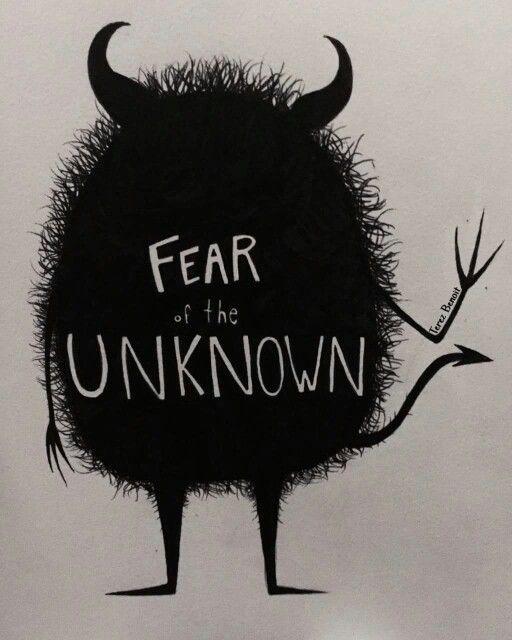

There is a specific kind of discomfort that almost every human being knows intimately: the discomfort of not knowing.
Not knowing if the relationship will work out. Not knowing if the job opportunity will come through. Not knowing what the doctor will say. Not knowing if the decision you made was the right one. Not knowing what the next chapter of your life will look like.
For many people, uncertainty does not simply feel uncomfortable. It feels threatening.
When we do not know what is coming, the brain tries to protect us by filling in the gaps. It analyzes, predicts, prepares, and searches for answers. It replays conversations, creates possible scenarios, and looks for patterns in an attempt to regain a sense of control.
This is not because your brain is trying to make your life harder. Your brain is doing exactly what it was designed to do: protect you.
The problem is that life does not offer us the certainty our brains crave.
The skill that changes everything is not learning how to eliminate uncertainty. It is learning how to sit with uncertainty without allowing it to control your decisions, relationships, and ability to experience joy.
Learning to tolerate uncertainty is one of the most valuable emotional skills we can develop because uncertainty is not a temporary inconvenience of life. It is part of being human.
Why Uncertainty Feels So Hard
Our brains are wired for survival. From an evolutionary perspective, paying attention to uncertainty helped humans identify potential threats and prepare for danger. A brain that noticed possible risks was more likely to keep us safe.
The problem is that our modern brains often respond to emotional uncertainty as if it is the same thing as physical danger.
Waiting for someone to respond to a text message. Wondering whether a major decision will work out. Sitting in a season of transition where you cannot see what comes next. These experiences can activate the same threat system that makes us scan for problems and search for safety.
Psychologist R. Nicholas Carleton’s research on intolerance of uncertainty explains that difficulty tolerating unknown outcomes is strongly connected to anxiety and worry. His work suggests that uncertainty itself can become something the brain interprets as threatening, even when there is no immediate danger.
Research: Carleton, R. N. (2016). Into the Unknown: A Review and Synthesis of Contemporary Models Involving Uncertainty. Journal of Anxiety Disorders.
https://pubmed.ncbi.nlm.nih.gov/26945765/
The tricky part is that anxiety often convinces us that more thinking will create more safety.
But there is a difference between problem-solving and rumination.
Problem-solving asks, “What can I do?”
Rumination asks, “How can I guarantee nothing bad happens?”
One leads to action. The other often leaves us feeling exhausted, stuck, and even more anxious.
The Cost of Constantly Trying to Create Certainty
When uncertainty feels unbearable, we often begin organizing our lives around avoiding discomfort.
We may delay decisions because we are waiting until we feel completely confident. We may repeatedly seek reassurance because we are trying to quiet the discomfort of not knowing. We may avoid opportunities because we cannot guarantee success. We may mentally prepare for every possible outcome because our brain believes that anticipating pain will somehow protect us from experiencing it.
Sound too familiar?
The challenge is that these strategies often provide temporary relief while reinforcing the belief that uncertainty is something we cannot handle.
Avoidance teaches the brain that the thing we avoided must have been dangerous. The more we avoid uncertainty, the more threatening uncertainty can begin to feel.
Research consistently connects intolerance of uncertainty with increased anxiety, worry, and avoidance behaviors. A 2024 systematic review and meta-analysis found that psychotherapy approaches targeting intolerance of uncertainty can improve a person’s ability to tolerate unknown outcomes, suggesting that this is not simply a personality trait but a skill that can be developed and strengthened.
The irony is that constantly trying to eliminate uncertainty can actually teach your brain that uncertainty is dangerous. Healing often comes from creating new experiences that teach your nervous system: “I can be uncertain and still be okay.”
Sitting With Uncertainty Does Not Mean Giving Up Control
Learning to tolerate uncertainty does not mean becoming passive. It does not mean ignoring problems, refusing to plan, or pretending that difficult situations do not matter. It means learning the difference between taking effective action and trying to control something that cannot be controlled.
There are moments when we need to gather information, advocate for ourselves, set boundaries, or make a decision.
And there are moments when the healthiest thing we can do is wait. Waiting is a skill. For many people, waiting feels unbearable because it creates a sense of powerlessness. The nervous system wants to do something, anything, to regain control. It wants certainty because certainty feels safe.
But emotional regulation often requires learning how to stay present when there is no immediate solution.
Sometimes there are no answers yet.
Sometimes there are only question marks.
Learning that you can survive the question marks is a powerful form of resilience.
How to Build Your Ability to Sit With Uncertainty
Learning to tolerate uncertainty does not happen overnight. Like any emotional skill, it is built through practice. One of the first steps is noticing when your brain enters certainty-seeking mode.
Maybe you notice yourself checking for reassurance. Maybe you are replaying a conversation over and over. Maybe you are researching every possible outcome or asking everyone around you what they think. Instead of judging yourself for this, try approaching it with curiosity. Ask yourself: “What is my brain trying to protect me from right now?”
Often underneath anxiety is something much more vulnerable.
Fear of rejection.
Fear of failure.
Fear of disappointment.
Fear that you will not be able to handle what happens next.
When you understand the fear underneath the anxiety, you can respond with compassion instead of immediately trying to eliminate the feeling.
Learning to Trust Yourself in the Unknown
One of the biggest shifts that happens when we build uncertainty tolerance is moving from seeking certainty to building self-trust.
Instead of asking, “How do I know everything will be okay?” we begin asking, “Can I trust myself to handle what happens?”
That is a very different question.
Because the truth is, you have already survived countless uncertain moments in your life.
You have navigated situations you never expected.
You have adapted.
You have learned.
The goal is not to create a life where nothing unexpected happens. The goal is to become someone who trusts themselves through the unexpected. The goal is to remember your history and that you can handle whatever may come!
Staying Grounded in the Present Moment
Anxiety pulls us into the future.
It asks all types of questions: “What if?” “What happens next?” “What if everything goes wrong?”
The present moment asks: “What is true right now?”
Mindfulness-based practices can help strengthen this skill by teaching us to notice thoughts, emotions, and physical sensations without automatically reacting to them.
Research supports mindfulness-based interventions as helpful tools for reducing anxiety symptoms and improving emotional regulation.
A thought can exist without becoming a command. A fear can exist without becoming a prediction. An unanswered question can exist without taking over your entire life.
The Goal Is Not to Love Uncertainty
The goal is not to become someone who enjoys uncertainty. Most people do not. Humans naturally crave safety, predictability, and stability. The goal is to become someone who trusts themselves enough to move forward without needing every answer first.
Every meaningful part of life requires uncertainty. Relationships require vulnerability growth requires change, healing requires stepping into places we have never been before.
We cannot wait until we feel completely certain before we begin living. The people we admire are not the people who have eliminated uncertainty. They are the people who have learned how to move forward while uncertainty exists.
They have learned:
“I can be uncomfortable and still move forward.”
“I can feel afraid and still choose courage.”
“I can not know what happens next and trust that I will meet myself there.”
A Therapist’s Reminder
You do not have to feel certain to move forward.
Emotional safety does not come from knowing exactly what happens next.
It comes from building trust that you can care for yourself through whatever happens.