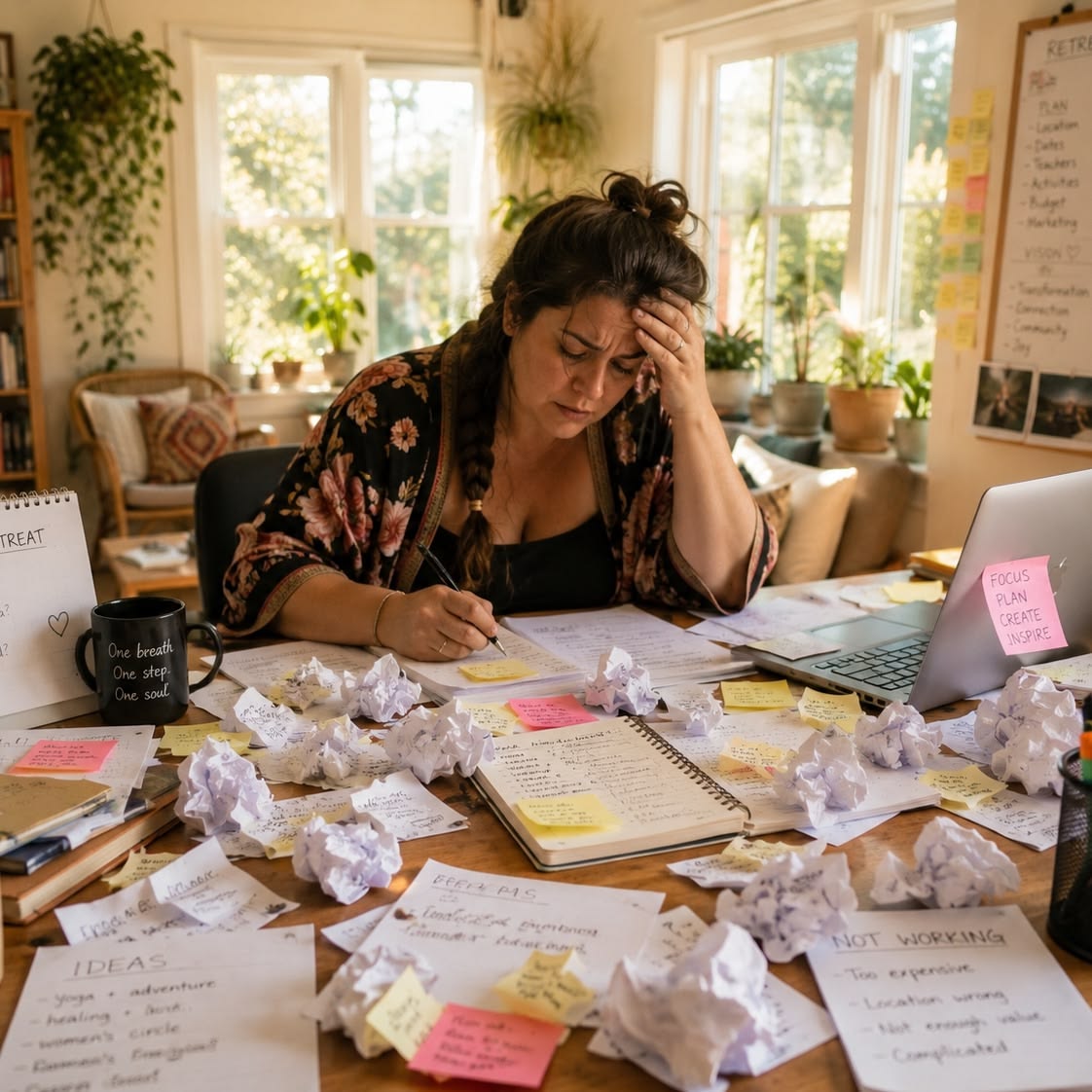

Many women spend years feeling like they are constantly behind, trying to catch up.
These women are smart, capable, caring, and successful, yet everyday tasks seem to require an exhausting amount of effort. They complete space on appointments, lose important items, struggle to complete projects, feel overwhelmed by clutter, procrastinate until the pressure becomes unbearable, or find themselves emotionally drained from trying to keep everything together.
For some women, this is not a lack of motivation or discipline. It may be a sign of undiagnosed ADHD.
ADHD is often associated with young boys who are hyperactive and disruptive, the cuties that could never stay in their seat or not yell out in class (shout out to my husband). Many women get overlooked in that early diagnosis stage, they experience ADHD in ways that are quieter, more internal, and easier to miss. Instead of being recognized, these symptoms are often mistaken for anxiety, perfectionism, emotional sensitivity, laziness, or simply being “immature.”
Understanding ADHD in women is not about finding another label for yourself. It is about understanding your brain, recognizing patterns, and finding tools that work with your nervous system instead of constantly fighting against it.
Why ADHD Looks Different in Women
For so many years, ADHD research and diagnostic criteria focused primarily on boys. Because of this, many young girls and women learned to compensate for their symptoms in ways that made ADHD less visible.
Some women become high achievers who rely on perfectionism, over-preparing, people-pleasing, or intense bursts of productivity to stay afloat. They can appear organized from the outside while internally feeling exhausted from the amount of energy it takes to maintain that “put together” image.
Some women may develop adaptive coping strategies that mask their struggles, such as:
- Creating complicated systems to avoid forgetting things.
- Waiting until the last minute because urgency creates enough stimulation to focus.
- Overcommitting because saying no feels difficult.
- Overthinking conversations and relationships.
- Pushing through exhaustion because they believe they “should” be able to handle more.
The problem is that masking can work for a while, but it often becomes harder to maintain as life becomes more complex.
If you are having a, “if this f*cking play about us?!” moment, then keep reading.
Common ADHD Signs in Women
ADHD can look different from person to person, but some common experiences among women include:
You struggle with starting tasks, even when they are important.
You may know exactly what needs to be done, understand the consequences of said task not getting done, and genuinely want to complete the task, but getting started feels almost impossible.
This is often misunderstood as procrastination or avoidance. However, ADHD can involve challenges with executive functioning, which impacts planning, organization, prioritizing, and initiating tasks.
You experience “all or nothing” productivity.
Some days you may feel unstoppable, accomplishing an incredible amount in a short period of time. Other days, even small tasks feel overwhelming. This inconsistency can be confusing and frustrating because it can feel like, “If I can do it sometimes, why can’t I always do it?”
The answer is that ADHD is not about ability. It is often about regulation.
You are easily overwhelmed by everyday demands.
Women with ADHD describe feeling like their brain has too many tabs open at once. (me, it’s me, I say this all the time)
A simple to-do list can feel impossible because every task connects to five other unfinished tasks. This can lead to shutdown, avoidance, irritability, or emotional exhaustion.
You have intense emotions.
Women with ADHD experience emotions deeply. ADHD is a REGULATION disorder more than it is an attention disorder, it really needs a full re-brand.
You may notice:
- Difficulty calming down after feeling upset.
- Feeling rejection more intensely.
- Becoming easily overwhelmed by criticism.
- Feeling shame when you believe you have disappointed someone.
Emotional regulation challenges are a common part of ADHD but are often misinterpreted as being “too emotional.”
You rely on pressure to get things done.
Many women with ADHD describe needing a deadline, crisis, or external pressure to activate focus.
This can look like:
- Waiting until the night before something is due.
- Cleaning the entire house when someone is coming over.
- Doing your best work when there is urgency.
This is not because you do not care. ADHD brains often respond strongly to interest, urgency, novelty, and stimulation.
Why ADHD Is Often Misdiagnosed as Anxiety
Many women are first diagnosed with anxiety because anxiety symptoms can overlap with ADHD.
For example:
Constantly thinking about everything you need to remember may look like anxiety.
Over-preparing may look like anxiety.
Difficulty relaxing may look like anxiety.
Fear of making mistakes may look like anxiety.
And sometimes anxiety is present. But for some women, anxiety develops partly because they have spent years trying to compensate and mask for their untreated/undiagnosed ADHD.
Maybe you repeatedly experience missed deadlines, forgotten tasks, emotional overwhelm, or feeling like you cannot keep up, it makes sense that your brain begins to worry. Anxiety is certainly part of the picture, but ADHD may be the reason no medicine or therapy has helped so far.
ADHD and the Mental Load Women Carry
Many women with ADHD spend years carrying an invisible mental load. Women in todays (sometimes dystopian) society are expected to carry so many roles flawlessly Wife, Mother, Sister, Friend, Boss Bitch… to name a few.
A nonexhaustive life of some things they may be managing:
- Household responsibilities.
- Parenting demands.
- Work expectations.
- Relationships.
- Appointments.
- Schedules.
- Emotional caretaking.
The challenge is that executive functioning struggles often become more noticeable when demands increase. The systems and masks they created break down when the demand or environment changes.
A person who managed well in college may struggle after entering the workforce.
A person who managed work well may struggle after becoming a parent.
A person who felt capable for years may suddenly feel like they cannot keep up.
This does not mean something changed about who you are. It may mean your environment began requiring more executive functioning than your brain can comfortably provide without additional support.
What To Do If You See Yourself in This
If this article feels eerily familiar, it does not automatically mean you have ADHD. Many experiences overlap with stress, trauma, anxiety, burnout, depression, sleep challenges, and other factors.
However, it may be worth exploring with a mental health professional, NOT TIK TOK.
Consider:
- Talking with a qualified mental health professional about your experiences.
- Learning more about ADHD presentations in women.
- Reflecting on whether these patterns existed throughout your life, not just during stressful seasons.
- Exploring strategies that support executive functioning, regardless of diagnosis.
The goal is not to find a reason to excuse your struggles. The goal is to understand yourself with more compassion and create systems that actually support the way your brain works.
The Bottom Line
Many women with ADHD have spent years trying harder instead of understanding differently.
They have called themselves lazy when they were overwhelmed.
They have called themselves disorganized when they needed different systems.
They have called themselves too sensitive when their nervous system was responding intensely.
Getting answers can be powerful because understanding yourself changes the question from:
“Why can’t I just do this?” to: “What support does my brain need to make this easier?”
You do not have to keep fighting yourself to prove you are capable. Sometimes the first step toward change is finally understanding why things have felt so hard.