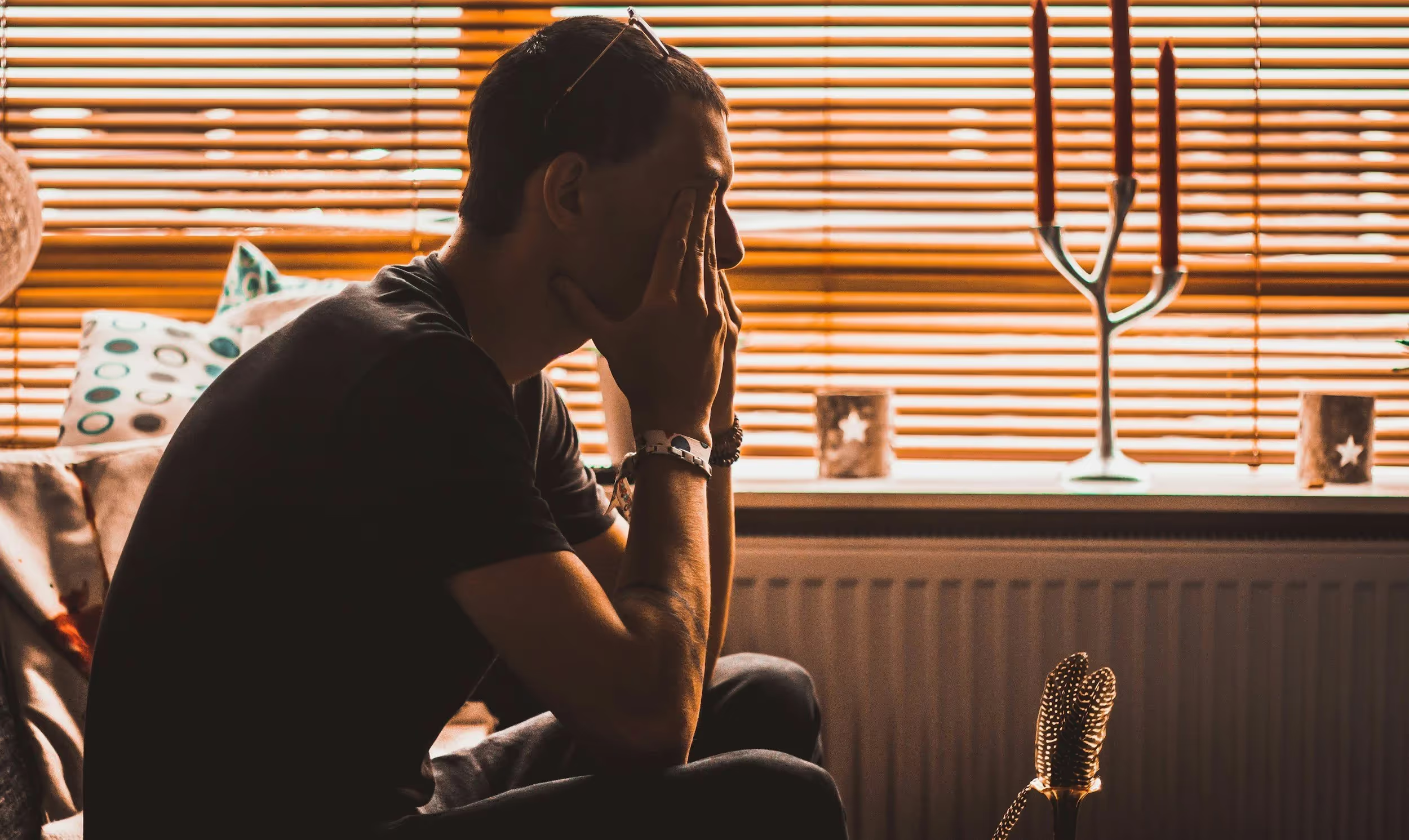

There is a particular kind of exhaustion that does not go away with sleep. It comes from always being “on,” managing, performing, smoothing things over, staying ahead so nothing falls apart. On the outside, you may look capable and composed. On the inside, your nervous system never really relaxes.
For many people, this is not a personality trait. It is a nervous system doing exactly what it had to do to survive, for years chronically.
When being “strong” was never optional
If you grew up in chaos, had to stay alert to someone else’s moods, lived through trauma, or carried responsibilities far too big for a young person, your nervous system learned vigilance like a first language.
Gabor Maté, a leading expert in trauma-informed care, explains that our bodies do not forget our histories. They adapt. Survival strategies such as hypervigilance, emotional disconnection, overfunctioning, and people-pleasing are not character flaws, they are our brain and our body being smart and creating adaptations that kept you safe. Even now, your nervous system may still be always on the lookout for danger, making rest and calm feel uncomfortable.
This can appear as anxiety, high-functioning overwhelm, difficulty or feeling guilty when resting, emotional numbness, or second-guessing yourself. These are not signs of weakness. They are evidence that your body learned to survive under stress.
Rebuilding self-trust after trauma
Going through trauma can erode the trust we have in ourselves. You may question your feelings, your memories, or your even decisions. I like to call this “self-gaslighting”. Brené Brown’s research on vulnerability and shame explains this clearly: shame tells us that something is wrong with us, while vulnerability acknowledges that our experiences matter. Healing begins when you start listening to yourself with compassion rather than judgment.
Your anxiety, shutdowns, and overfunctioning are nervous-system strategies. They once helped you survive. Understanding this is the first step toward restoring trust in yourself.
The good news, we can heal
The body keeps score, but it can learn a new rhythm. The same neuroplasticity that encoded survival patterns can also make space for new patterns of safety and regulation. Trauma-informed therapy, like EMDR therapy, IFS therapy, DBT, and mindfulness-based approaches, helps the nervous system gradually experience safety. These specific therapy modalities help regulate emotions, reconnect with the body, and restore self-trust after trauma.
Gabor Maté emphasizes that healing is not about “getting over” what happened. It is about connection, to your body, your needs, and others who can meet you with presence instead of judgment. Brené Brown reminds us that courage is choosing honesty even when fear is present. Healing is not dramatic. It is often the quiet work of staying with your own experience, one breath at a time, with kindness.
You are not “too much”
If you have lived in survival mode for years, feeling overwhelmed is normal. Your system is noticing the cost now. Healing is not about rushing or becoming someone entirely different. It is about learning to tell yourself the truth gently:
“I am tired.”
“I have carried so much.”
“Parts of me are still braced for the past.”
“I deserve nervous-system peace, not just survival”.
Healing is relational and gradual. It is about learning to feel safe in your body and to experience calm, connection, and trust in yourself again.
Evidence-informed resources to explore
Moxie Healing Collective
- Learn about trauma-informed therapy in Maryland: moxiehealing.com
- More on our therapy approach: https://www.moxiehealing.com/trauma-therapy
Gabor Maté
- Official site: https://drgabormate.com
- When the Body Says No: link
- The Myth of Normal: link
Brené Brown
- Official site: https://brenebrown.com
- Atlas of the Heart: link
- TED Talk The Power of Vulnerability: link
Other trauma-informed resources
You are not behind. You are not weak for feeling tired. You are a human being whose nervous system learned to survive very early. You are beginning the quiet, courageous work of learning how to rest and feel safe again.